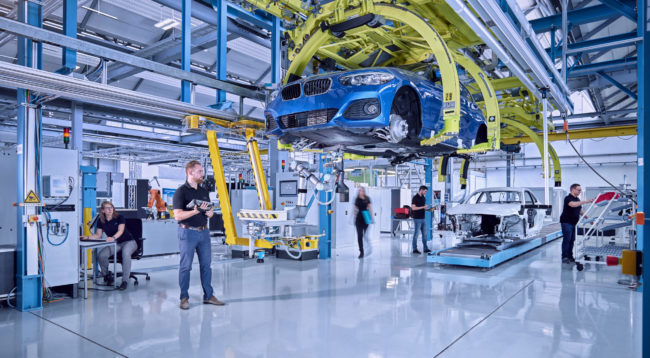
Neuro-Ergonomic Digital Factory

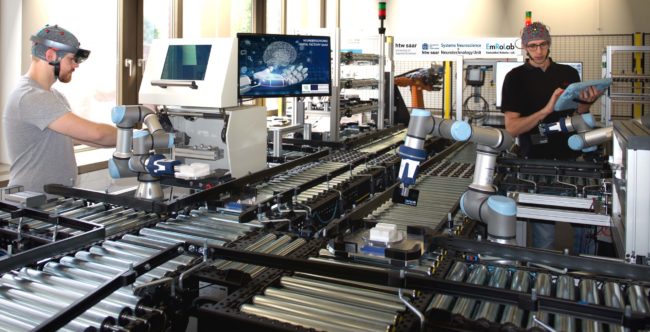
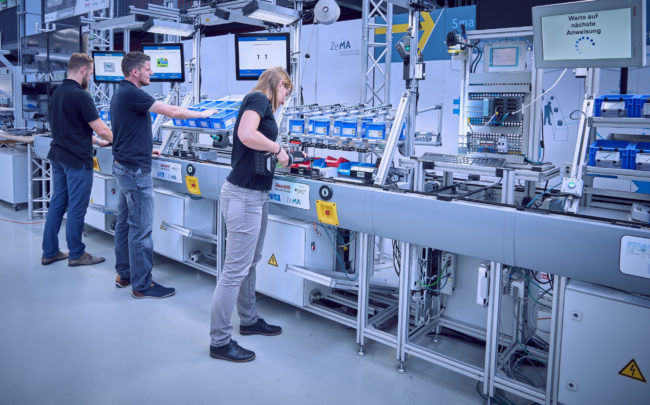
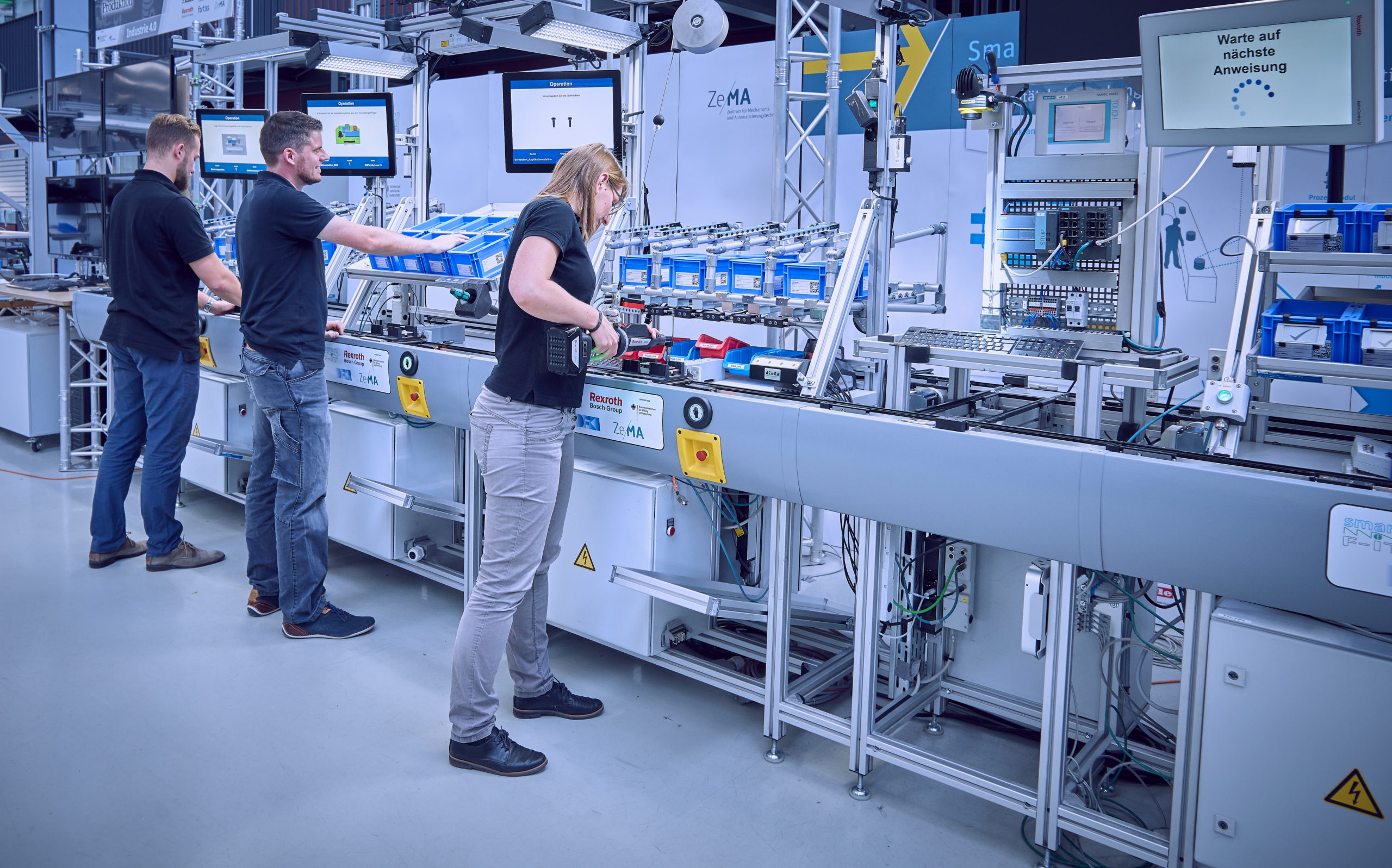
The aim of the Neuroergonomic Digital Factory Saar is the realization of a research and development platform for a human-centered, neuroergonomic human-machine collaboration in highly digitized production. The project uses neuroscience-based approaches and recently developed methods of mobile psychophysiological human monitoring to research workplaces in digitized production or to develop new collaboration systems and strategies.

Immersive Mixed Reality – Multi-Immerse

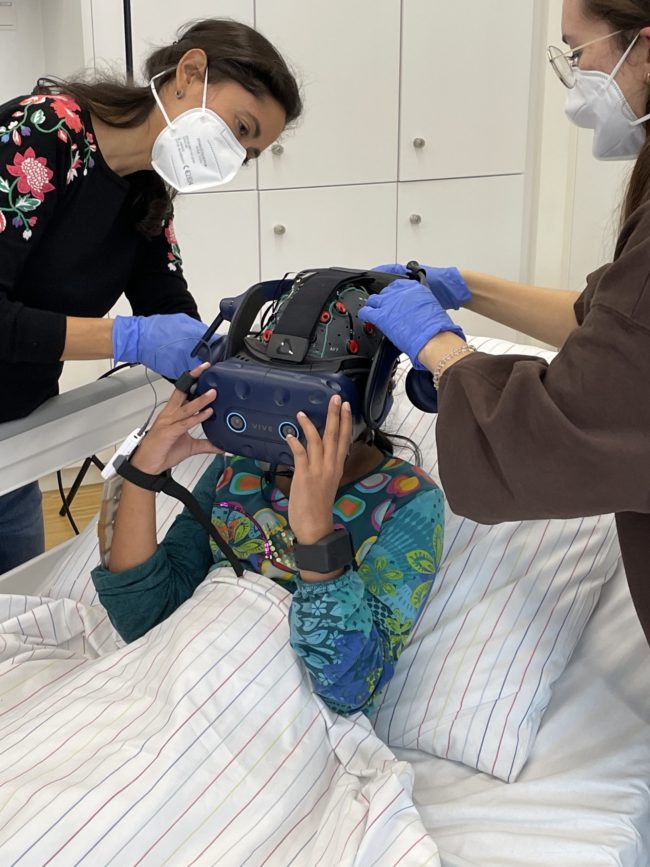
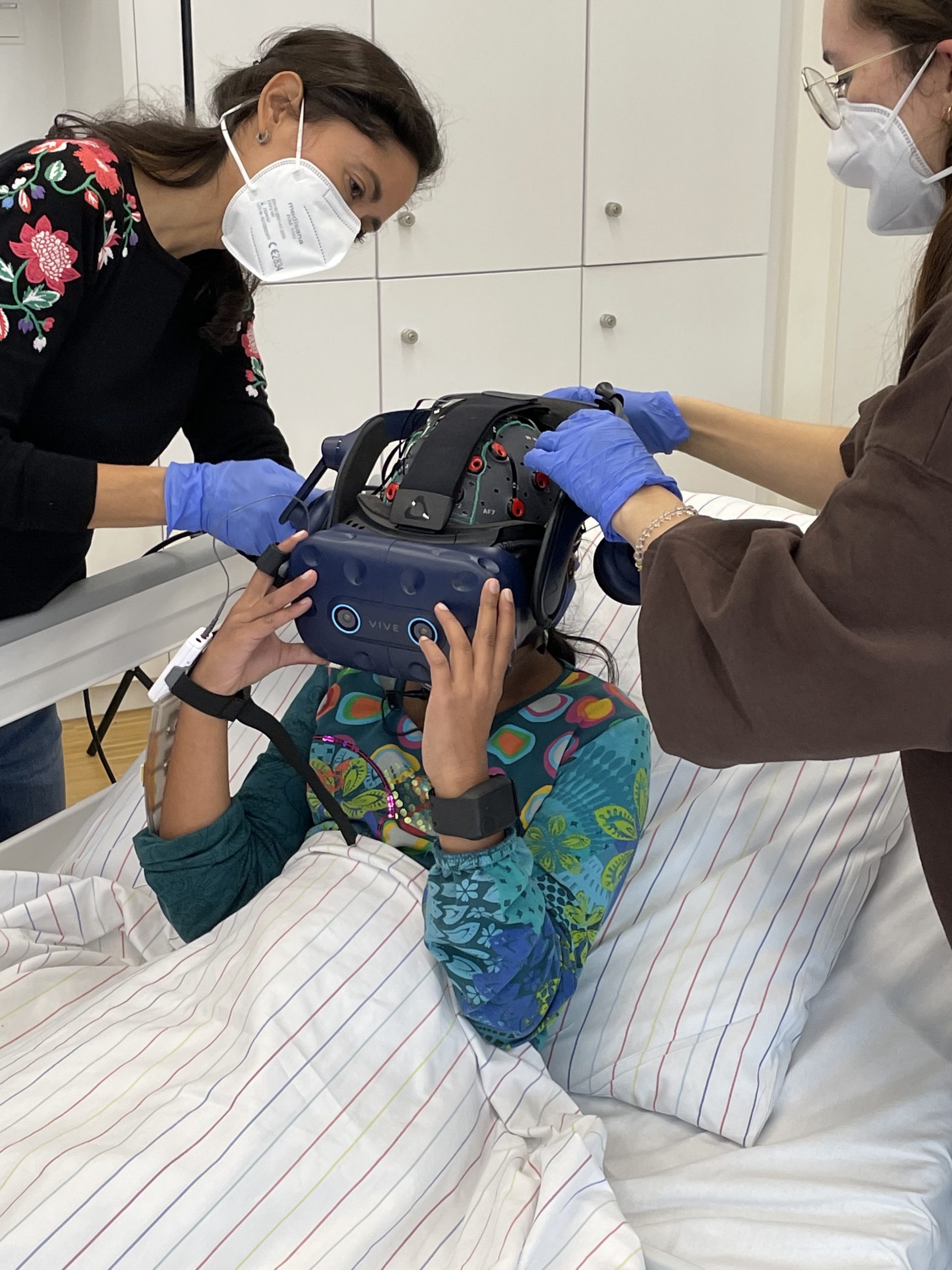
Immersive Mixed Reality – Multi-ImmerseThematic area Immersive Mixed Reality is about technologies that allow immersion in a virtual environment and interaction with the virtual environment. This is not only about visual immersion, but also about acoustic and haptic immersion.ProjectThe Multi-Immerse project is about human proximity through the multisensory optimization of immersive, virtual...

Biomedicine: Digital OP – Digital Scrubs

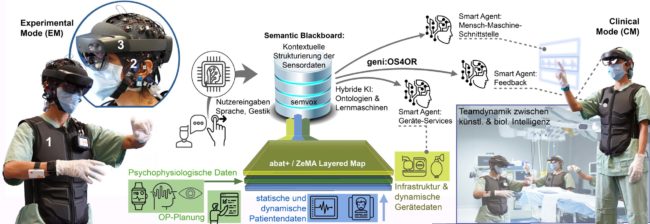
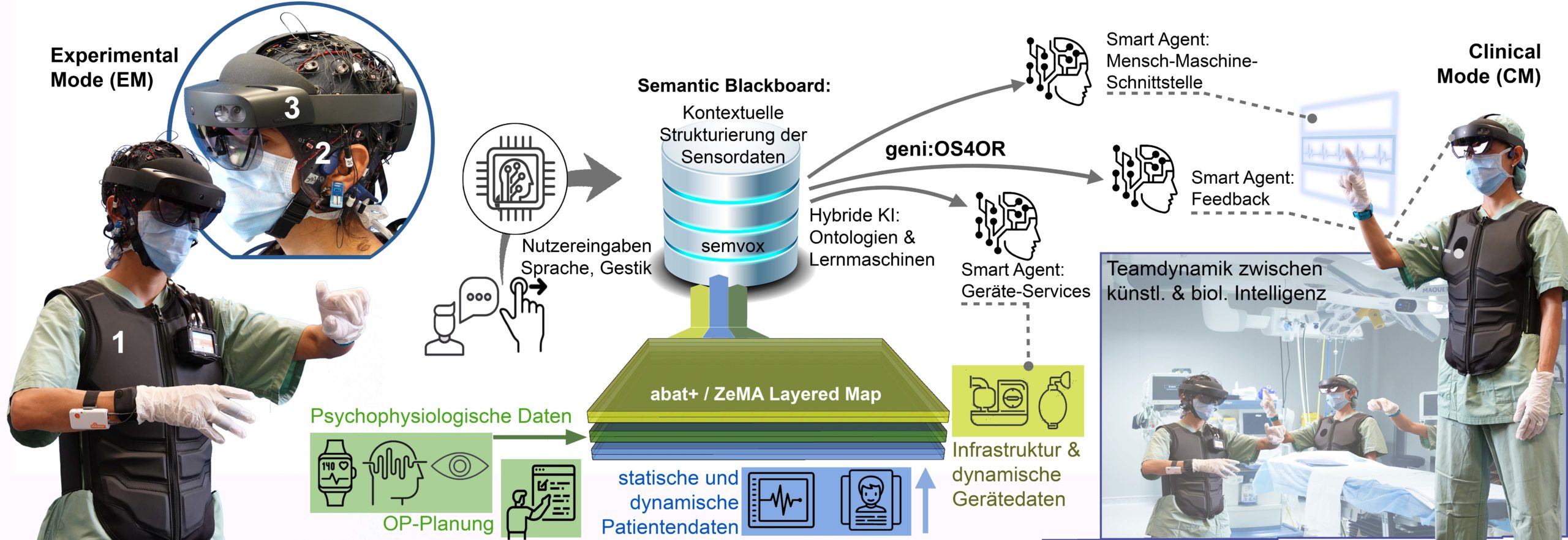
Biomedicine: Digital OP – Digital ScrubsProjectInterpersonal and multimodal attention assistance system for context-sensitive, neuroergonomic human-machine interaction in networked operating theatresBackgroundNetworked operating theatres using artificial intelligence will be able to provide more and more information in the future. However, in order for surgical teams to be able to use this flood of information profitably, they must always resort to a limited resource, which is their...

Mittelstand-Digital Center Saarbrücken

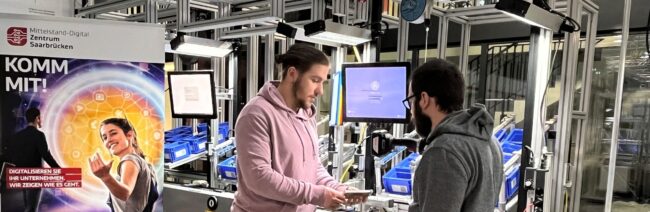
Small and medium-sized enterprises (SMEs) in the Saarland face numerous economic and social challenges, which can be clearly met by support in the digital transformation. The region's industry focus is on manufacturing and production-related industries, production-related services, the information and communication technology (ICT) industry and the other services sector (engineering offices, health,...

VProSaar

VProSaar Distributed production for the Saarland automotive industry: The ongoing structural change (due to decarbonization, electrification, etc.) in the automotive sector will inevitably lead to the adaptation of existing but also to the development of completely new innovative products and services. In order to maintain competitiveness and consolidate the position of production facilities (in this case mainly SMEs), it is necessary to...

SenRob

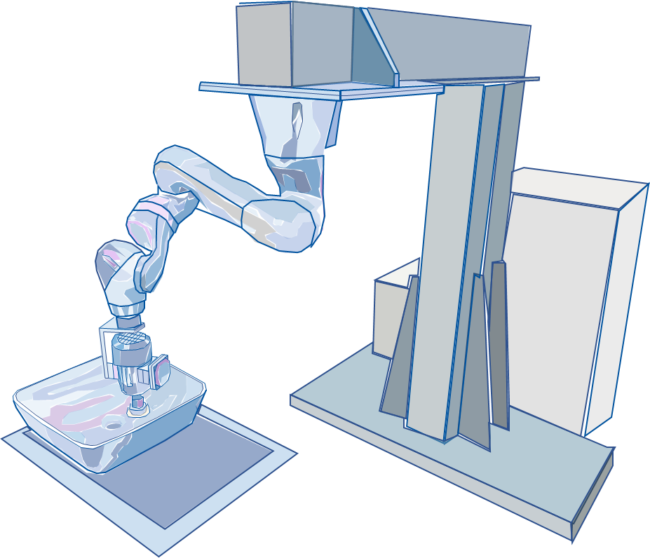
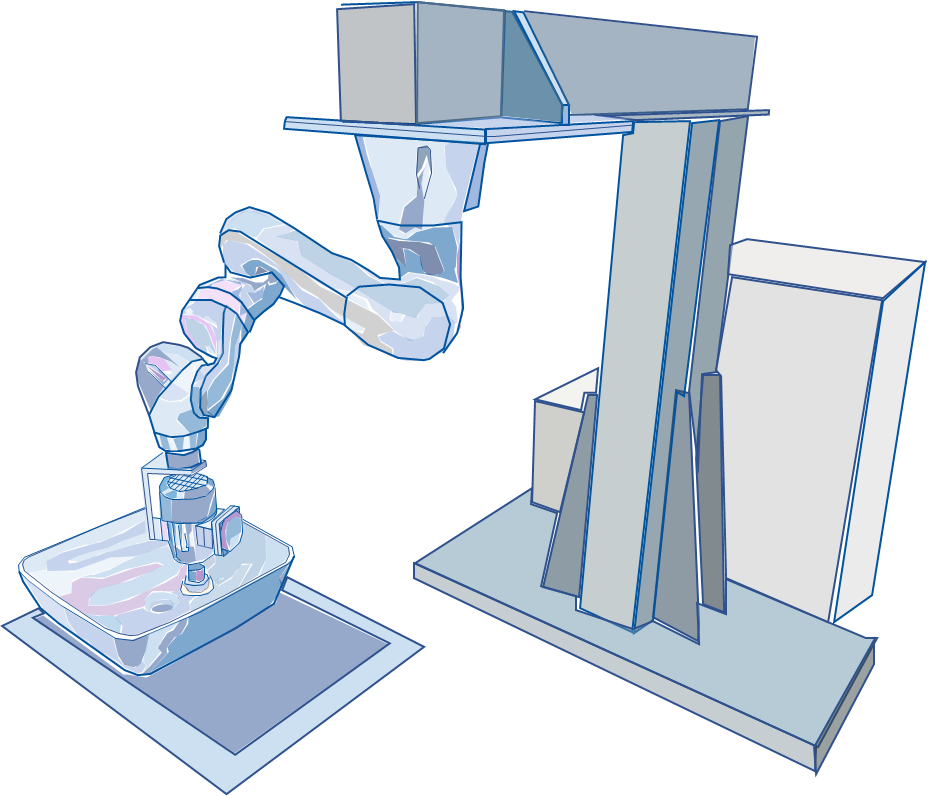
ZTS Project SenRob ProblemThe manufacturing process of ceramic components results in production-related material supernatants as well as defects that have to be removed in the downstream white plastering process. Grinding requires a direct interaction of the tool with the workpiece surface to be machined, so that contact forces and moments are created. When automating such a process with the help of a robot, a compliant behavior of the robot manipulator is necessary. Especially...

H2SkaProMo

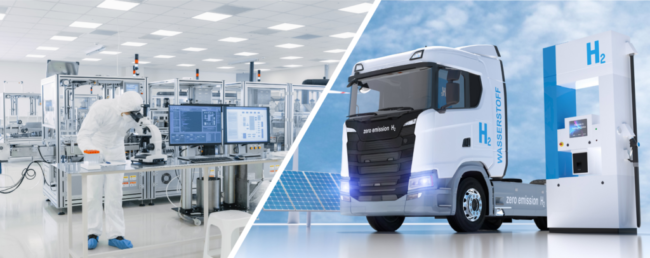
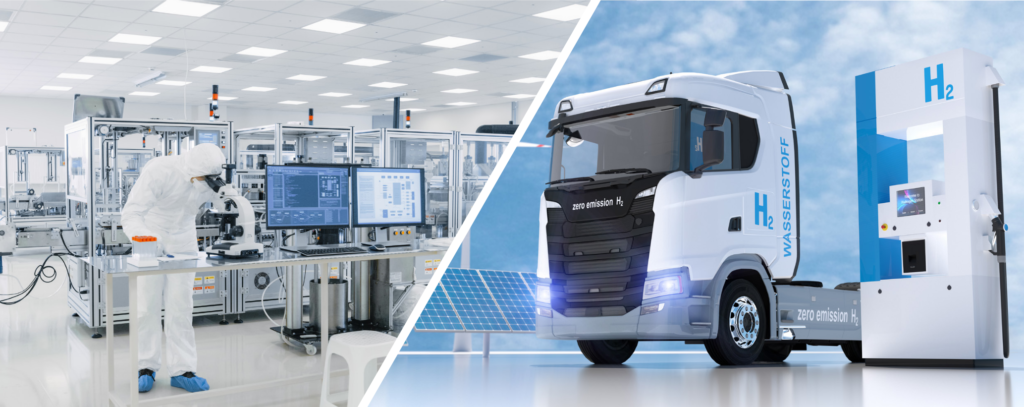
H2SkaProMo – Scalable cyber-physical production systems for the assembly of fuel cell stacks In the joint project funded by the Federal Ministry for Economic Affairs and Climate Protection (BMWi), 15 partners from industry and research will work together on the production technology for energy technologies of the future. The Saarland University with its Chair of Assembly Systems leads the consortium, while ZeMA is an associated partner.

DECMAS

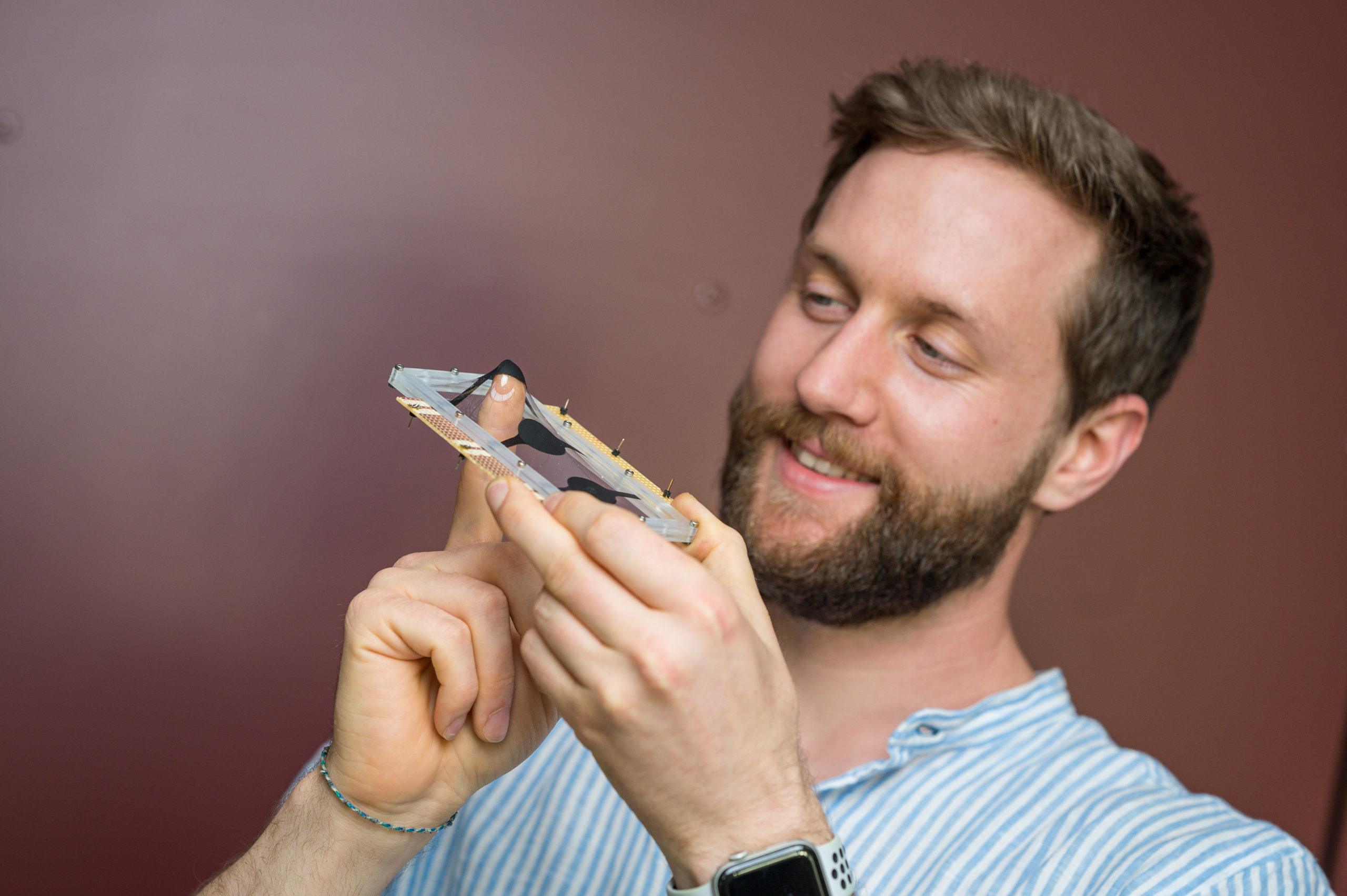
DECMAS – Dielectric Elastomer Membranes for Cooperative Micro-Actuator/Sensor Concepts The DECMAS project is funded by the German Research Foundation (DFG) and is part of the DFG Priority Programme SPP 2206 KOMMMA. Novel, miniaturized and cooperative dielectric actuator concepts are being researched. The project is a collaboration of the Chair of Intelligent Material Systems under the direction of Prof. Seelecke from the University of...

H2 Pressure Senses

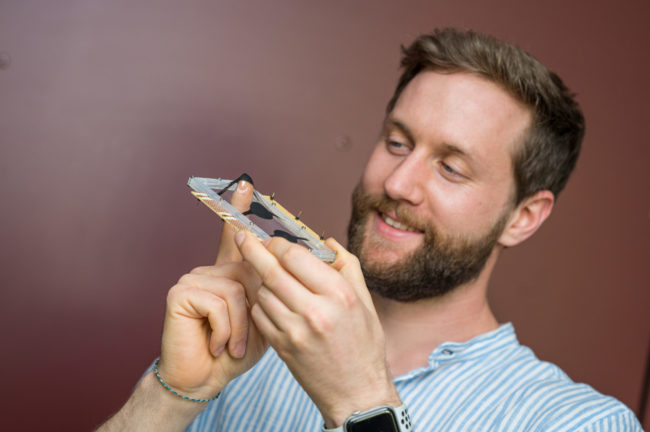
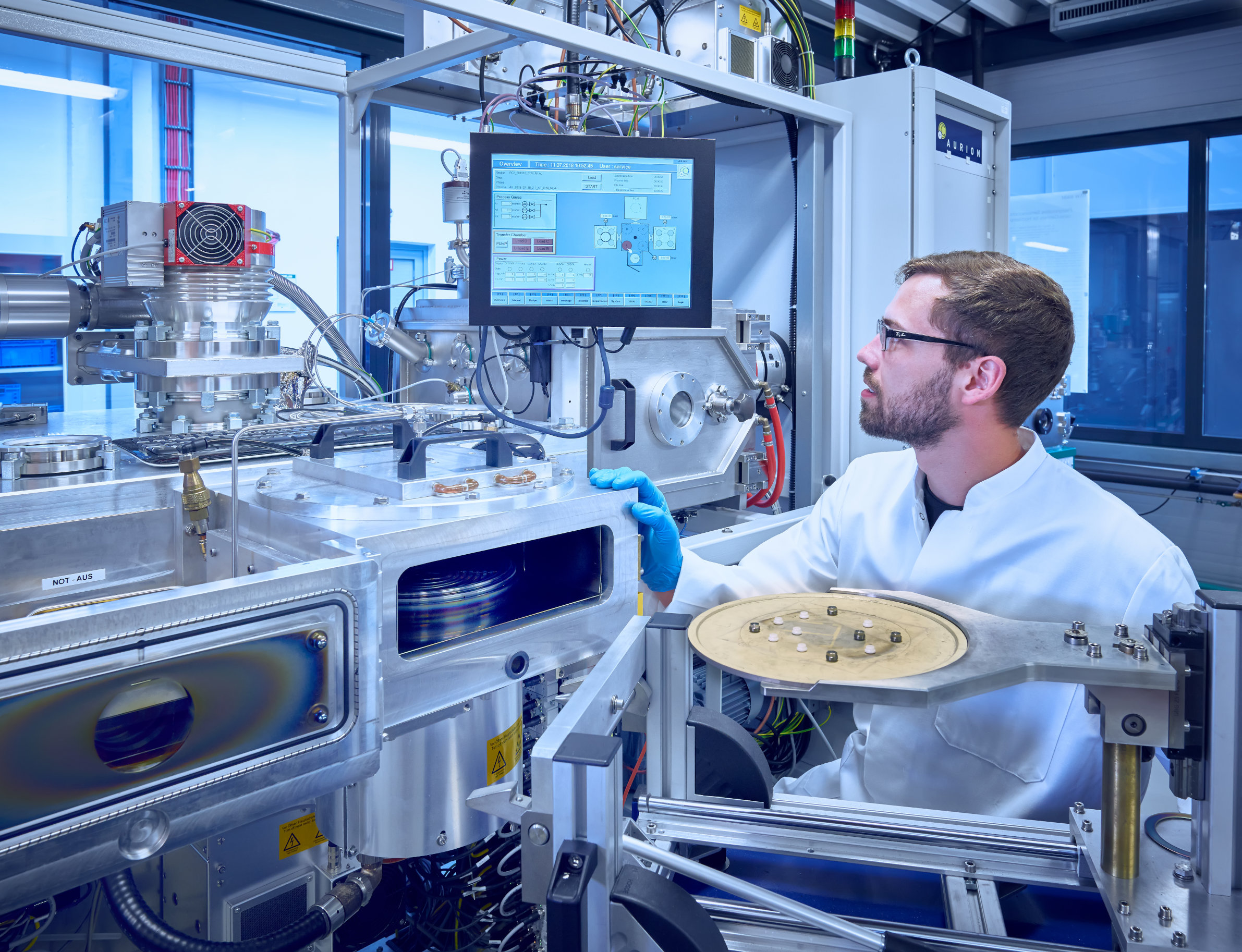
H2-DruckSensHydrogen-compatible pressure sensors made of ceramic sensor bodies with highly sensitive sensor layers The project is part of the BMWi programme ‘Innovations for the Energy Transition’ and deals with the development of hydrogen-compatible pressure sensors. With the help of ceramic sensor bodies and highly sensitive stretch-sensitive thin films, pressure sensors are to be developed that are ideally suited for applications with hydrogen, a key element of the energy transition. The project is a...

AFM-DMS

AFM-DMSD strain resistance effect of metallic sensor layers in antiferromagnetic state The piezoresistive effect enables highly sensitive sensors for mechanical quantities such as strain, force and pressure. Known materials are semiconductors and granular metals, in which the band gap or the electron tunneling allows the sensor effect. But there is another material class that is still little researched for this sensor technology: antiferromagnetic metals such as chromium. At...