SatX2Factory - Adaptive mass production of small satellites in a factory scenario

problem
Due to the commercialization of space through easier and more regular transport options into space, the space industry is changing. Due to the size and production time, small satellites are becoming a central building block for future applications in areas such as Earth observation, communication or navigation. However, the increasing demand shows that the previous, often manual production no longer meets the requirements of modern, efficient production.
The challenges are manifold. A wide variety of variants, small quantities and strict quality requirements complicate the standardization and automation of processes. At the same time, global competition requires a rapid market introduction of new technologies in order to survive in the growing market for small satellites. Previous approaches to series production are often designed on standardized platforms and fail due to the necessary flexibility to meet individual customer requirements.
The challenges are manifold. A wide variety of variants, small quantities and strict quality requirements complicate the standardization and automation of processes. At the same time, global competition requires a rapid market introduction of new technologies in order to survive in the growing market for small satellites. Previous approaches to series production are often designed on standardized platforms and fail due to the necessary flexibility to meet individual customer requirements.
objective
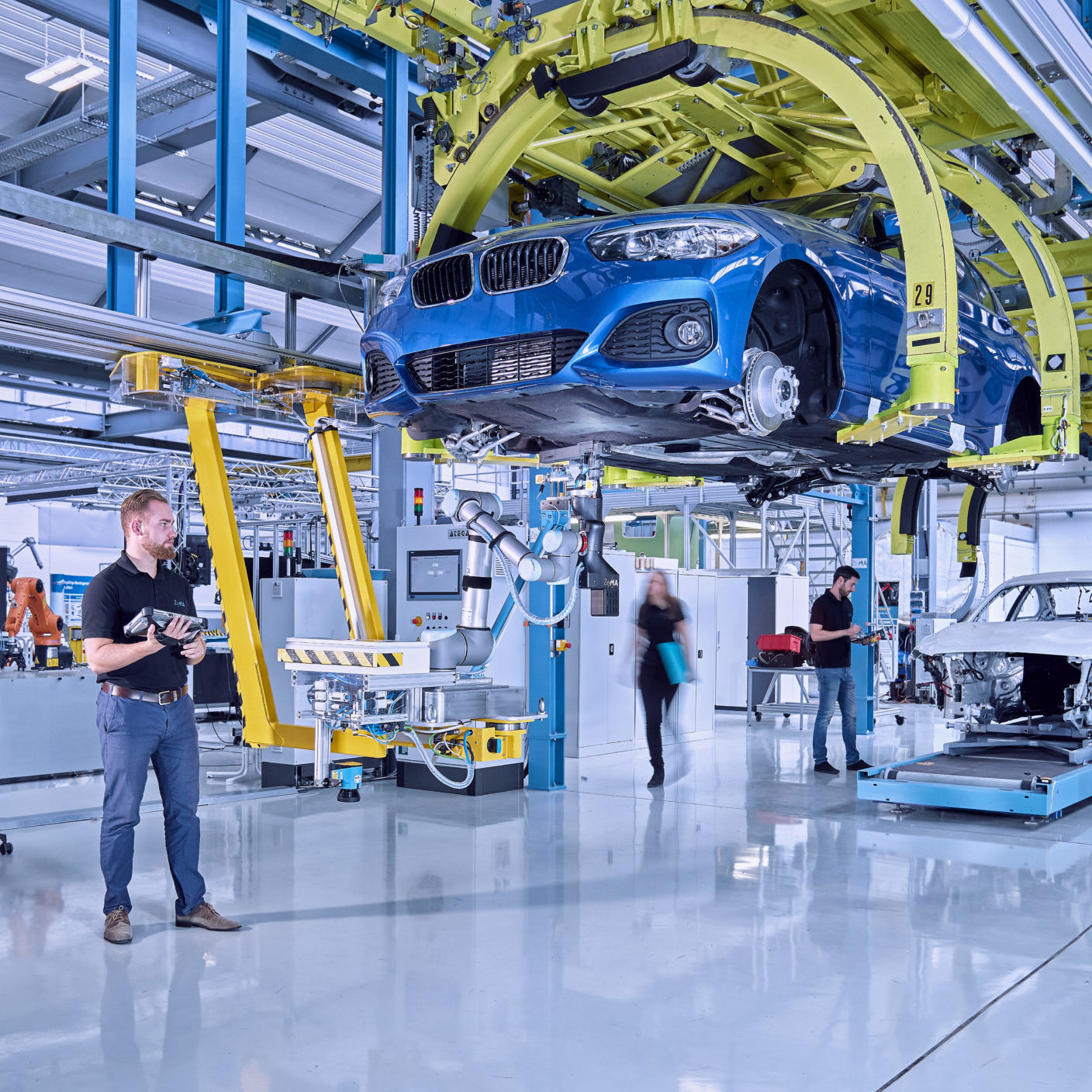
The aim of the SatX2Factory project is to develop an innovative and application-oriented concept for the adaptive series production of small satellites. The focus is on how adaptable, scalable and digitised manufacturing technologies from other high-tech sectors – such as aviation or the automotive industry – can be transferred to space.
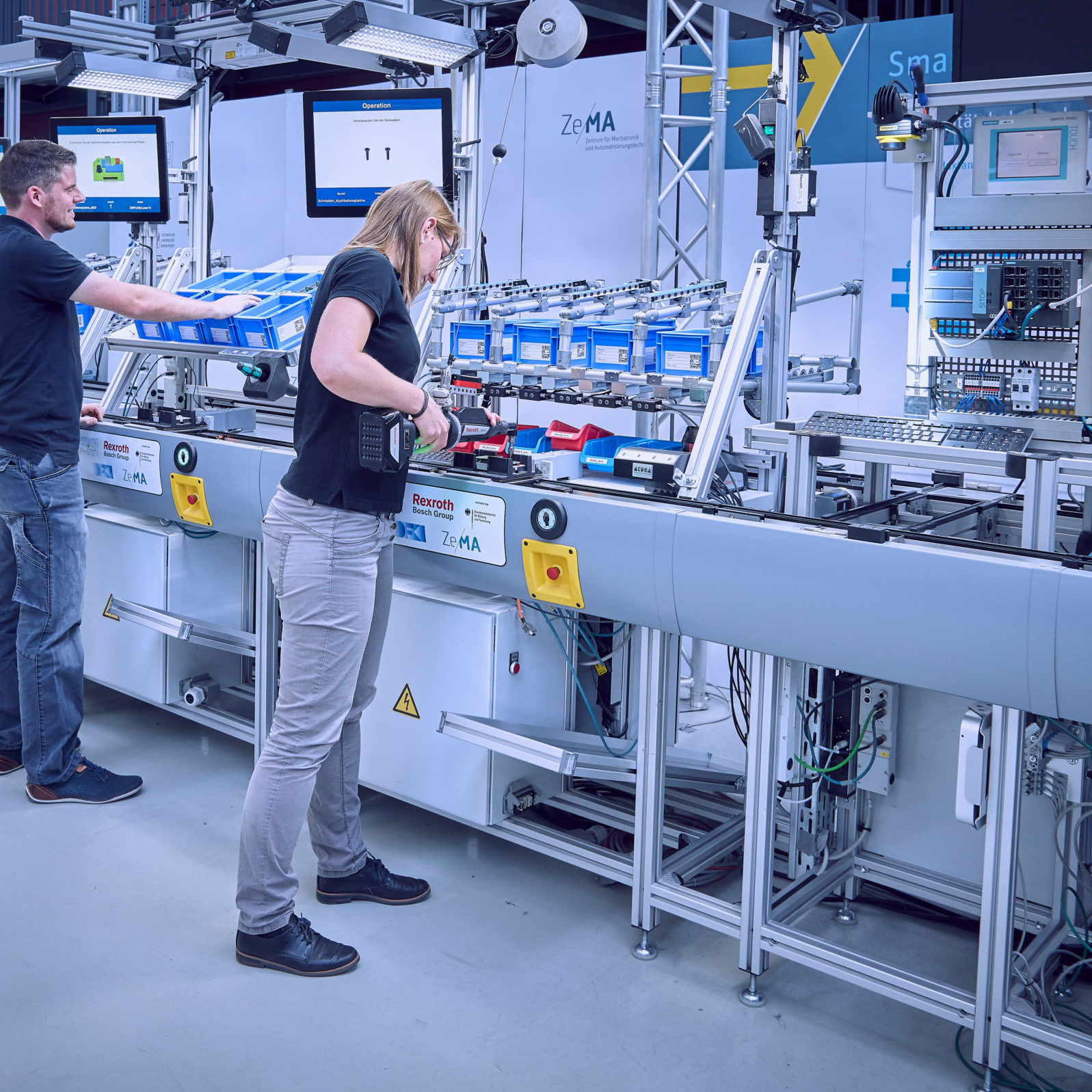
For this purpose, assembly-oriented product design, optimized and flexible processes as well as modern, adaptable resources are combined to enable efficient, high-quality and at the same time flexible production. The concept should work independently of quantities or variants and serve as a basis for future factory scenarios. A particular focus is on the scalability of the solutions in order to be able to cover both small series and larger quantities.
For this purpose, assembly-oriented product design, optimized and flexible processes as well as modern, adaptable resources are combined to enable efficient, high-quality and at the same time flexible production. The concept should work independently of quantities or variants and serve as a basis for future factory scenarios. A particular focus is on the scalability of the solutions in order to be able to cover both small series and larger quantities.
approach
The project pursues a holistic and interdisciplinary approach that closely links the product, process and resources. In close cooperation between research and industry, the specific requirements for the production of small satellites are first analysed. At the same time, best practices and proven solutions from other industrial sectors that can be adapted for space travel are identified.
Subsequently, solutions for adaptive and adaptable series production are developed. Modern production concepts are used, which make it possible to react quickly and flexibly to changing requirements, such as new product types, varying quantities or adapted quality standards. A central component is the integration of digital technologies to make processes more efficient and predictable.
Subsequently, solutions for adaptive and adaptable series production are developed. Modern production concepts are used, which make it possible to react quickly and flexibly to changing requirements, such as new product types, varying quantities or adapted quality standards. A central component is the integration of digital technologies to make processes more efficient and predictable.
Results / Project status
The project develops a practical concept that serves as the basis for the implementation of a modern, adaptive series production of small satellites. The results should serve as a guide to make production processes future-proof, efficient and competitive.
The close integration of research and application results in a concept that is not only theoretically sound, but can also be implemented in practice. This allows companies to gradually adapt their manufacturing processes to the new requirements while increasing quality, flexibility and efficiency.
The close integration of research and application results in a concept that is not only theoretically sound, but can also be implemented in practice. This allows companies to gradually adapt their manufacturing processes to the new requirements while increasing quality, flexibility and efficiency.
Recovery concept:
The project results enable the transfer of proven manufacturing concepts into the practice of the space industry. This not only strengthens the competitiveness of German space travel, but also builds up new know-how in production research. This creates the basis for further innovations in high-variant series production and promotes technology transfer between industries.
Duration: 01.05.2026 – 30.04.2028
Funded by:
Project promoter:

Contact: Fabian Adler, fabian.adler@zema.de
Category: Assembly systems

 EN
EN  DE
DE  FR
FR